[delaware_section_title select_type=”8″ underline_check=”1″ text_color=”#FFFFFF”]The Juvenile Justice Policy and Oversight Committee (JJPOC) Workgroups are specialized teams that support the committee’s mission to improve outcomes for youth in Connecticut’s juvenile justice system. Each workgroup focuses on a specific area of reform—such as diversion, detention, reentry, education, or system accountability—and collaborates to research best practices, review data, and develop policy recommendations.[/delaware_section_title]
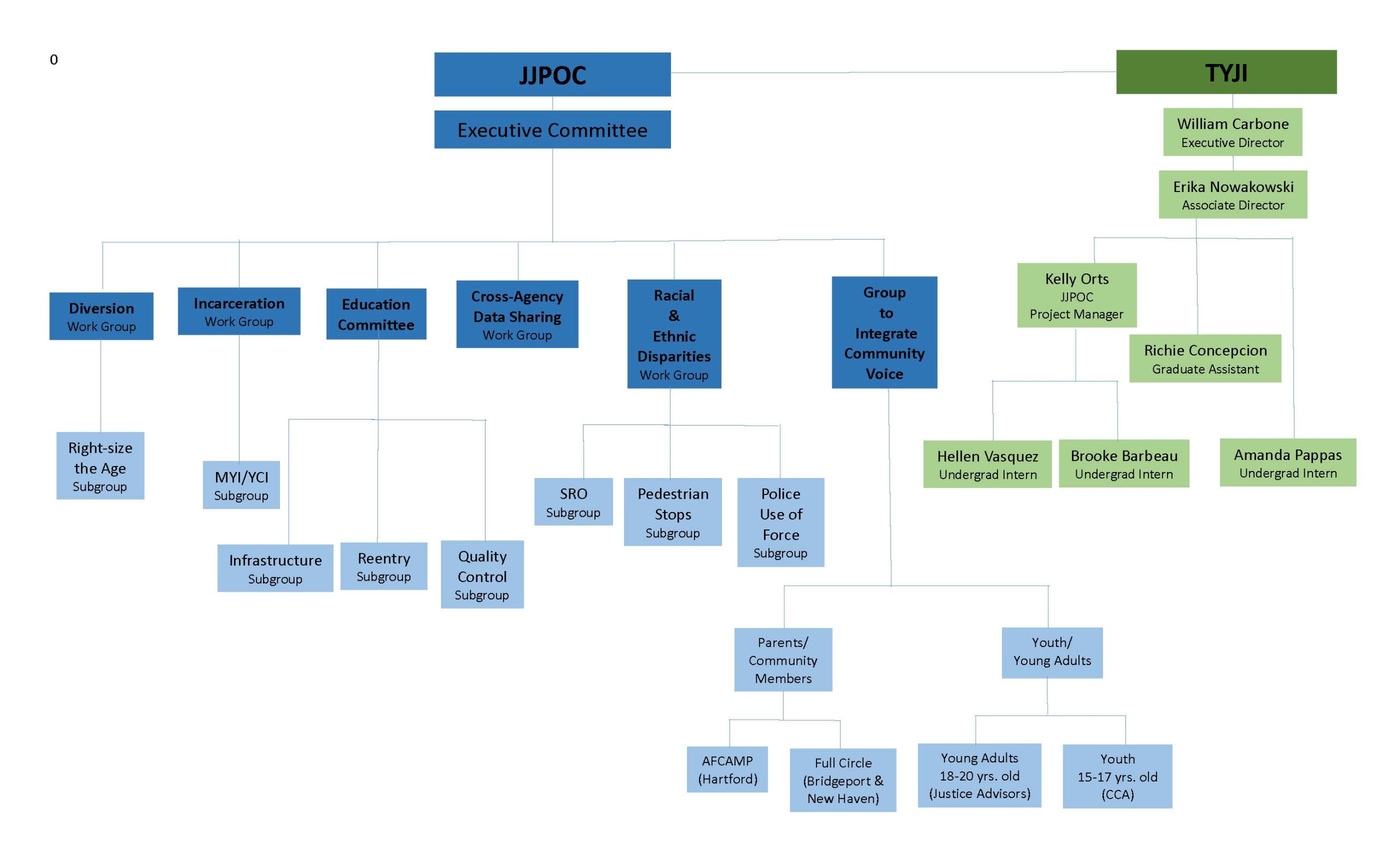
The chart reflects the workgroup structure of the JJPOC that was updated in 2018 during the strategic planning process. Subgroups are identified as needed when a component of the work is deemed in need of having a dedicated group focused on the issue. Descriptions of the workgroups are below.
[delaware_empty_space height=”70″]
Diversion
This group will be tasked to identify ways to increase and assess both the quality and availability of diversion programming. In order to do that, the group will ensure that youth have supports from youth-serving agencies (schools, Department of Children and Families, etc.) as viable alternatives to the formal juvenile justice system thereby reducing inappropriate referrals to the juvenile justice system. The group will identify sustainable funding for the Community-Based Diversion Plan and School-Based Diversion Framework through a variety of resources in order to address status offenders, such as truant or defiant youth, in community settings. A significant focus on setting a developmentally appropriate lower age limit of juvenile justice jurisdiction will be crucial to the overarching goal of the group
This group will be tasked to identify ways to increase and assess both the quality and availability of diversion programming. In order to do that, the group will ensure that youth have supports from youth-serving agencies (schools, Department of Children and Families, etc.) as viable alternatives to the formal juvenile justice system thereby reducing inappropriate referrals to the juvenile justice system. The group will identify sustainable funding for the Community-Based Diversion Plan and School-Based Diversion Framework through a variety of resources in order to address status offenders, such as truant or defiant youth, in community settings. A significant focus on setting a developmentally appropriate lower age limit of juvenile justice jurisdiction will be crucial to the overarching goal of the group
The purpose of this group is to ensure that race and ethnicity data and the strategies to address disparities are interpreted and developed in true partnership with communities of color as well as ensuring the collection, review, and public reporting of race and ethnicity data at each important point of contact in the juvenile justice system.
The group will be tasked with enhancing and supporting opportunities for localized review (community oversight) of school and police practices, promoting the use of racial justice assessments of policy proposals that impact justice and identifying opportunities where inequities within the juvenile justice system can be effectively addressed. The group will also be tasked with reviewing and eliminating or reducing the barriers in the justice system that prevent or hinder youth in their ability to mature and “age out of crime” and lead productive, healthy, law-abiding lives.
The role of this group is to identify and suggest ways to overcome the barriers to equal, sustainable participation with JJPOC work by those who have first-hand experience with the juvenile justice system. This group will use their first-hand knowledge to educate JJPOC members and provide input and feedback on policy and legislation.
This workgroup includes:
young people with current or prior juvenile justice system involvement,
parents, guardians, and family of those with current or prior juvenile justice system involvement,
victims of offenses committed by juveniles,
those who live in communities with a high rate of juvenile arrests
lack of transportation, stipends, childcare, feeling intimidated by the jargon used and titles held by people on the JJPOC need to be considered. Through their active participation in the JJPOC monthly meetings and workgroups and through focus group participation, they will directly educate and expand the knowledge of decision makers. The workgroup will also recommend ways the JJPOC can create a welcoming environment and process that value the input of community experts as equal partners with existing stakeholders.